
How Ovatio Comply governs every AI request.
Comply sits between your AI and the systems it reaches. On every request it confirms what the AI is allowed to do, on every response it protects what should stay private, and behind both it keeps an audit trail you can prove. Here is what that looks like, in plain terms.
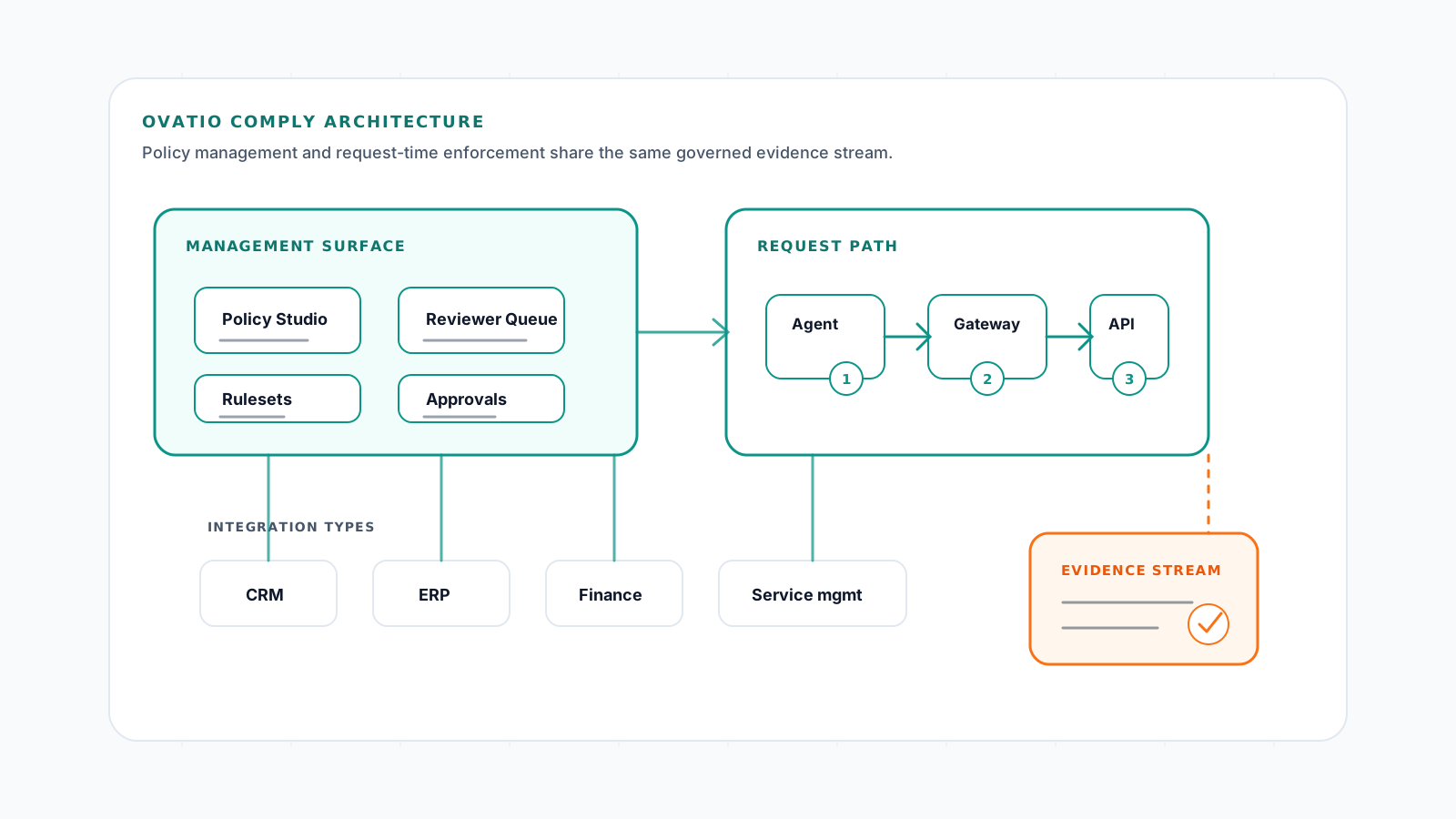
One governed path between AI and your systems
Instead of letting AI tools connect straight to your systems, you route those connections through Comply. To the AI it looks like the system it wanted to reach; to your systems it looks like a normal, well-behaved caller. In between, every interaction is checked against your rules, so the people who decide what AI may do and the AI that follows those decisions are never the same hands.
Every request is checked before it reaches your systems
On each call, Comply confirms who is asking, what role they hold, and exactly what they are trying to do, then applies your policy down to individual fields and parameters before anything is forwarded. Requests that need a human eye can be held for explicit approval, and nothing reaches the target until it passes. The result: AI gets the access you intended, not the access an over-broad credential happened to grant.
Every response is protected before it returns
Answers coming back are filtered against the same policy. Sensitive fields can be hidden, partially masked, allowed only under the right conditions, or held back entirely. The AI receives a clean, compliant result, and the reasons a value was withheld stay in the record instead of leaking back to the caller.
Always-on awareness of what AI can reach
Connected systems change. Comply continuously takes stock of every capability the governed integrations expose and keeps a living inventory of them. When something shifts, such as a new action becoming available or a parameter changing, it raises a reviewable event so a new way in is never quietly added without anyone noticing.
Human judgment stays in charge
Comply uses AI to do the tedious first pass: drafting policy suggestions, proposing how data should be classified, and flagging drift. Every consequential decision then goes to a person to approve, change, or reject. Your written governance principles sit above all of it: a suggestion that conflicts with a principle is surfaced for a human, never applied on its own. Governance gets sharper as it runs, without ever running itself.
Runs in your environment, fully observable
Comply deploys inside your own infrastructure, so your data and the decisions made about it never leave your control. It reports its own activity and health through the monitoring you already use, giving your operations and security teams a live view of what AI is doing across your systems.
Evidence you can actually prove
Every decision Comply makes is written to a tamper-evident audit trail. Entries are cryptographically linked, so any later change is detectable, and you can verify the trail's integrity whenever you need to. When an auditor asks what the AI was allowed to do, who approved it, and what came back, the answer is a record you can show, not a claim you have to defend.